
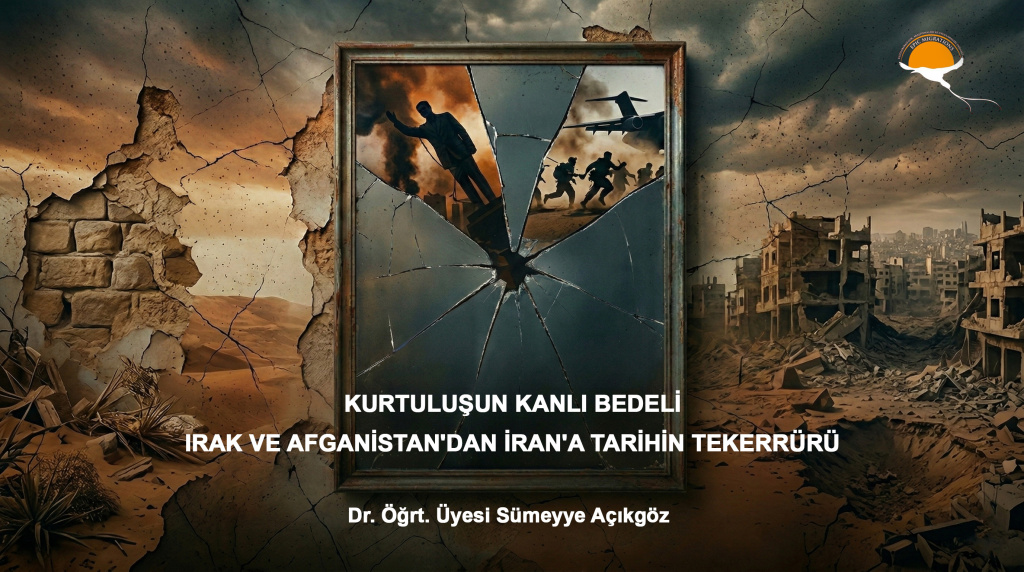
History often conceals dark corridors behind doors opened with great hope. Today, the rising cries for change and shouts of “we are being liberated” in Iran remind us of the Middle Eastern panorama from twenty years ago. However, to read the future, it is essential to look at where those who once rejoiced stand today.
The Iraq Intervention: From Jubilation to the Darkness of Abu Ghraib
In April 2003, the toppling of Saddam Hussein’s massive statue in Baghdad by an American armored vehicle was broadcast to the world as “the end of an era and the dawn of democracy.” There were Iraqis climbing onto tanks and throwing flowers at soldiers.
Abu Ghraib: The Bankruptcy of a Promise of Freedom
The heaviest blow to the dignity of the Iraqi people occurred within the walls of Abu Ghraib Prison. The actions of those who arrived as “liberators” destroyed all bridges of legitimacy in the minds of the public. The photos leaked in 2004 documented not just physical violence, but a systematic policy of humiliation and dehumanization.
- Systematic Sexual Violence and Harassment:The sight of prisoners stacked naked on top of one another, reports of rape against both male and female detainees, and the fact that these moments were recorded with smiles as if they were “souvenir photos” stripped away the West’s mask of human rights.
- Cultural and Religious Degradation:Privacy and religious values—the most sensitive aspects of a Muslim society—were weaponized as torture methods. Every path was taken, from forcing the consumption of pork to mocking religious rituals.
- Psychological Devastation:These crimes did not remain within the prison walls. In an Iraqi society where the family structure is sacred, they led to the fragmentation of thousands of families and turned the concept of “shame” into a societal paralysis.
The Institutionalization of Chaos
Under the banner of “De-Baathification,” the American administration dissolved the Iraqi army and state bureaucracy in a single day. The result: hundreds of thousands of armed, trained men were left on the streets—unemployed, humiliated, and furious.
- Looting and Lawlessness:While museums, libraries, and hospitals were being ransacked, American troops focused solely on protecting the Ministry of Oil. This was the moment the public faced the reality: “They didn’t come to save us; they came to save our resources.”
- Seeds of Sectarianism:The occupation administration attempted to govern Iraq through sectarian and ethnic lenses rather than meritocracy, laying the foundations for the Shiite-Sunni conflicts that remain unresolved today.
A Memory That Cannot Recover
Today, Iraq still suffers from power outages, corruption has become a way of life, and the breeding ground for terrorist organizations like ISIS was the very soil of hatred created by those years of occupation. That moment of toppling the statue—once celebrated—was actually the beginning of a decades-long process of exile and mourning for millions of Iraqis.
Afghanistan: Endless Migration and the Anatomy of a Modern Betrayal
At the end of 2001, coalition forces entering Kabul served the world a single image: girls going to school. Western media marketed this occupation as an “operation to liberate women.” Yet, after 20 years, what remains is a country in ruins despite trillions of dollars spent, a traumatized population, and the haunting image of people falling to their deaths after clinging to the wheels of a departing plane.
Invisible Victims: Night Raids and “Mistaken” Massacres
In rural Afghanistan, the war was not what appeared on television. For villagers, war meant special forces breaking down doors in the middle of the night and executing fathers in front of their children.
- Wedding Convoys and Funerals:American UAVs repeatedly bombed wedding convoys and funeral gatherings under the guise of “faulty intelligence.” Every “mistake” was a seed that grew hatred against the foreign power in the hearts of the people.
- The Invisibility of Civilian Casualties:Tens of thousands of civilians were imprisoned in statistics as “collateral damage.” The only way to survive was to flee to urban centers or neighboring countries—the start of a never-ending, epic journey of migration.
Corruption and Moral Decay: The Betrayal of the Puppet Government
While the Western-backed Kabul governments stole the people’s sustenance, they remained under the protection of foreign powers. Trillions of dollars in aid flowed into the Dubai bank accounts of an elite class.
- Covered-up Crimes:During the occupation, cases of harassment and rape involving foreign soldiers were hidden from the public behind the shield of military courts. The people, unable to find justice, coded the foreign soldier not as a savior, but as an occupier.
- Social Fragmentation:While a Western lifestyle was confined to a few neighborhoods in major cities, the countryside was pushed into hunger and the arms of radicalism.
The Final Act on the Airplane Wings: The 2021 Chaos
The greatest betrayal in Afghan history took place in August 2021 at Kabul Airport. The images of people clinging to the fuselage and falling one by one from the sky serve as a grim warning for anyone pinning their hopes on foreign intervention. As America quietly withdrew, it left the people in the hands of the very structure it had toppled 20 years prior—under much harsher conditions.
Warning Bells for Iran: The Anatomy of an Illusion
Today, the cries of “Woman, Life, Freedom” echoing in the streets of Iran stir an eager anticipation in the outside world. A segment of the population, stifled by the regime’s oppression, wants to believe that a “wind of democracy” from the outside will fix everything. However, at this very point, the ghosts of Iraq and Afghanistan begin to haunt the streets of Tehran.
External Intervention: Liberation or a Rehearsal for Plunder?
History has taught us that no great power launches a trillion-dollar operation on a country solely for human rights.
- Hostage Resources:Iran possesses some of the world’s largest energy reserves. In an externally supported “change,” the people’s freedom is usually bartered for the energy concessions of multinational corporations. The people may get rid of a dictator, but they lose the right to speak over their own resources.
- From Sanctions to Chaos:A population expecting prosperity with the arrival of “saviors” may find itself in the grip of a collapsed banking system and a black market.
Rape and Harassment: Humiliation as a Strategy of War
In a society like Iran, where conservative codes are strong, even a single case of harassment in a home entered by foreign boots opens irreparable wounds in the societal DNA. The risk of being treated as “booty” by an occupier can become a trauma more destructive than the oppression of the regime itself.
